

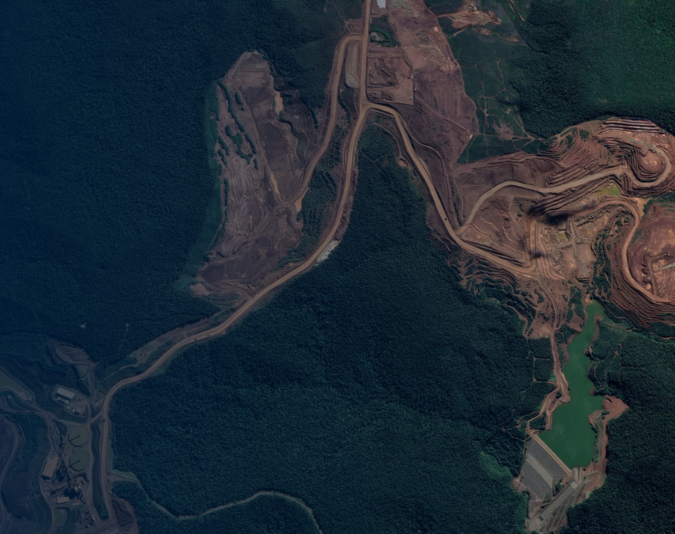
On the 12th February, 2026, Brazilian federal courts sentenced extractive mining financier Rodrigo Martins de Mello to over 22 years in federal prison for his command of illegal and unregulated gold mining operations in the dense jungles of northwestern Yanomami territories. The criminal activity, which has remained persistently underemphasized by national media and skyrocketed by over 300% since President Jair Bolsonaro’s administration (2019-2022), has recently destroyed swathes of vital rainforest, agricultural land, and critical infrastructure for marginalised communities at the edge of the Brazilian frontier. Alongside the destruction of local landscapes, communities across the 9.6 million square kilometers of Yanomami land have faced exponential rises in malnutrition-related deaths, preventable disease, and mercury contamination, which is now affecting almost 84% of the population above 2 µg/g levels through tainted waterways and agricultural produce (Fiocruz, 2024; Mongabay, 2026).
In response to the arrest, local councils have welcomed an inkling of long-sought accountability for the violence and destruction caused by hidden extraction operations, revealing the lack of law enforcement, environmental protections, and quality-of-life guarantees offered to those outside of the urban cores of Brazil. Indeed, the case of Yanomami land unveils a network of sovereignty gaps, criminal violence, and local insecurities borne of the shortcomings of national legislation and international collaboration which yet promises to defend a natural geography vital for the Earth’s climate cycles, biodiversity, and atmospheric carbon absorption.
Rodrigo Martins de Mello’s sentencing marks a rare exercise of environmental justice, but a greater and more urgent need to engage with the Amazonian community’s geopolitical gaps of governance, where profit-driven resource exploitation continues to accelerate beyond the capacities of inter-state regulation.
The vastness of the Amazon’s boundaries, which span across nine nations symbolises the demarcation line of traditional, implementable nation-state governance, where the tangible impacts of centralised decision making are insubstantial and illegal extraction is free to thrive. A key platform for this enablement comes from the under-patrolled highways, airstrips, and river routes which facilitate illegal activities. A key example of such fragile geographical corridors is the BR-319 highway, a controversial 885-km route of interconnected, unrestricted roads that cut through federally-protected Yanomami territory and facilitate access and evasion for illegal extractors (The Guardian, 2026).
Practically, the futility of current state efforts has stemmed from years of underinvestment and lacking cross-border collaboration. Critical protections, like those offered by Brazil’s National Indigenous Foundation (FUNAI) have faced repeated underfunding, poor resource allocation, and declining monitoring capacities as criminal organisations adapt and consolidate (Secretaria de Comunicação Social, 2024). In this layered inequality, legislative grey zones permit non-state actors to operate with relative impunity, further eroding local reconciliation efforts and cross-border relations as porous borders do little to dissuade illegal trade and trafficking.
However, the human toll of the region’s mining plight stretches far further, tying its environmental degradation to profound loss within local communities. According to Global Witness (2023), 34 local conservationists were killed in mining disputes during 2022, 36% of whom were indigenous peoples of Yanomami descent. Such violence has also manifested in direct confrontation between miners and local towns, with armed intimidation and theft playing a key role in the escalations. Consequently, these pressures have caused forced displacement towards urban centres like Boa Vitas, further growing urbanisation projects while straining social services and local infrastructure. In regards to local security guarantees, illegal mining initiates a cascade into greater disasters: ecological destruction, undermined food supplies, poverty, and weakened governance which in turn strengthens criminality in the region.
Nevertheless, the international community has not remained static in the face of this illegal activity, with inter-state efforts seeking to curb criminal organisations on the rise, yet remaining uneven. For example, the EU’s Deforestation Regulation is currently seeking to block imports linked to major Amazon deforestation, targeting key destructive industries like soy, timber, and cattle projects. However, EU policy bodies have also recognised that criminal laundering through proxy organisations remains a major vulnerability in EU efforts, revealing further vulnerabilities in supply chain governance (EU Commission, 2026). Similarly, INTERPOL (2026) has intensified local policing operations, dismantling a growing number of illegal dredges and distribution hubs between 2024-2025. However, likewise, coordination has been constrained by jurisdictional red-tape and unequal capacities of rural police organisations. As such, local policing of environmental crime remains dependent on the fluctuating capabilities of underfunded and outmanned organisations.
Equally, bilateral cooperation between the United States and Brazil has grown since 2024, introducing satellite monitoring, drone capabilities, and personnel support into Amazonian policing. Although, organisations like Human Rights Watch (2023) maintain a stance that technical assistance and advanced surveillance cannot become a substitution for tangible action and a territorial presence that deters criminal activity on the ground. This rift is further reflected as wealthier import states place sweeping economic restrictions on impoverished communities while policing efforts are left to already burdened frontier organisations.
It is also key to note that the trade flows of illegally mined minerals have also remained obscure, with false documentation, investment scams, and corporation-scale laundering leading to large imports of illegal minerals being assigned and tied to investors across North America and Europe, further complicating an already fragile territorial scenario layered with various state and non-state facilitators in a legal grey zone. Consequently, local indigenous communities have accused nations in the Global North of generating a system of green imperialism, where Northerly illegal profit flows face little consequence while environmental disintegration continues.
Furthermore, the implications of the Amazon’s illegal mining crisis travel far beyond regional and national scales, with climate migration, habitat destruction, rising commodity prices, and global health risk placing the globe in a wider system of insecurity. Deforestation, land misuse, and profiteering continue to play a major role in rising greenhouse gas emissions, while unpoliced forestry undermines the sustainability commitments of the international community. Without the presence of cross-border collaboration and stronger multilateral security arrangements; indigenous communities, Amazonian wildlife, and our current way of life potentially hangs in the balance, with criminal activity likely to persist.
Fundamentally, the Amazon rainforest’s criminal extraction plight reveals a webbed system of sovereignty gaps, human and earth-wide insecurity, and a challenge of cross-border enforcement. Although accountability for these crimes is possible, it remains fleeting, short-lived, and fragile. For any form of environmental justice to be sustained, international collaboration, credible goals, and faithful reconciliation across communities must be adhered to if the geopolitical and natural stability of the Amazon is to be recovered.
Sources Used:
EU Commission- https://environment.ec.europa.eu/topics/forests/deforestation/regulation-deforestation-free-products_en
Fiocruz- https://portal.fiocruz.br/noticia/yanomami-contaminacao-por-mercurio
Global Witness-https://www.globalwitness.org/en/campaigns/land-and-environmental-defenders/missing-voices/
Guardian- https://www.theguardian.com/world/2026/jan/22/cross-border-crackdown-illegal-gold-mining-amazon
HRW- https://www.hrw.org/news/2023/01/26/brazil-restore-rule-law-amazon