
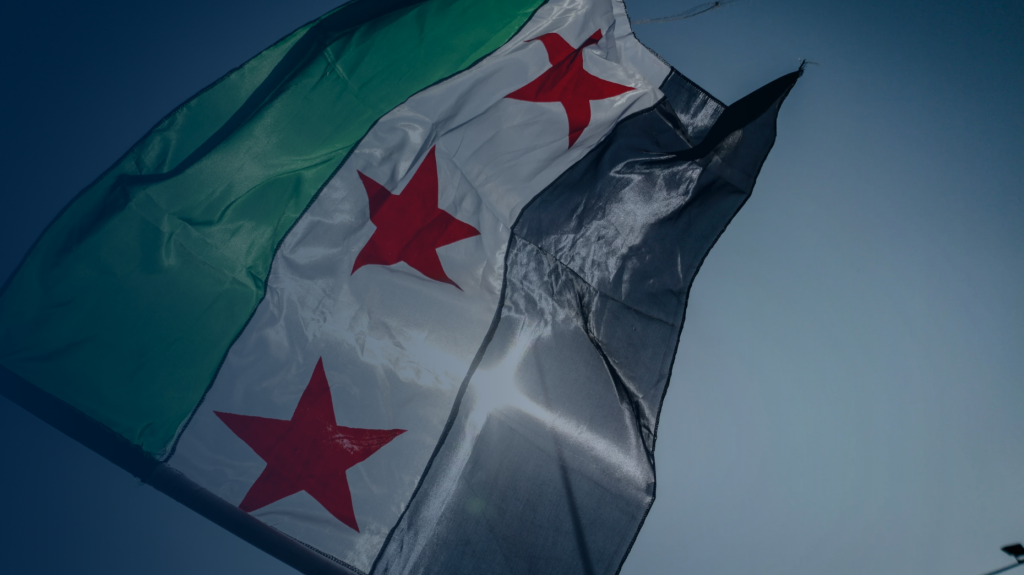
On the 18th January 2026, the Hay’at Tahrir al-Sham (HTS)-established interim government of Syria, led by President Ahmed al-Sharaa, announced a seminal ceasefire and national integration proposal with the Kurdish-led Syrian Democratic Forces (SDF). The deal, which state officials claim seeks to reconfigure Syria’s long-fragmented governance through a restoration of diplomatic relations, mandates the dissolution of the multi-ethnic SDF into the national armed forces, transferring local northeastern borders, infrastructure, and natural resource plants to HTS control. Additionally, government proposals appear to also symbolically cross historical and cultural divides, granting potential decrees on Kurdish rights, linguistic recognition, and legal citizenship.
Primarily, this strategic and state-level consolidation represents a significant fixture in Syria’s potential future as a nation reeling from over a decade of civil conflict and recent regime change from Bashar al-Assad’s rule in December 2024. However, amid recent reports of human rights violations by security forces in SDF territory and the release of ISIS prisoners in the AI-Hasakah Governorate in the ensuing chaos, the implementation of Syrian nationalisation frameworks raises concerns of state legal enforcement and accountability of violence (FDD, 2026; Reuters, 2026).
This restructuring also adapts to decades of nationalist-SDF contention and self-constructed de facto autonomous communities, revealing that a unitary national sovereignty ruled from Damascus could face evolving challenges on various scales. As of January 2026, stalled negotiations, aggressive military operations, and extended ceasefires have escalated such internal uncertainties. This follows recent government advances in Aleppo’s eastern provinces and clashes with SDF personnel, resulting in the death of at least 23 and the displacement of more than 170,000 (ReliefWeb, 2026). While ceasefire deadlines loom and government troops amass around SDF strongholds, the one-year mark of the Assad regime’s fall continues to illustrate a fragile, yet familiar period of transitional power in Syria.
Fundamentally, this redefinition of Syrian sovereignty entails an internal transformation of territorial authority, while also becoming an external claim of international diplomatic legitimacy and intercultural reconciliation, all despite an increasingly volatile national security context. In doing so, the HTS tread a Syrian post-war reality of cautious redistributions of power amidst increasing risks of socioeconomic instability and violent transition.
The HTS-led coalition has also sought to retroactively distance itself from its insurgent origins, adapting its outward communication to reflect values of statehood and institutional rule rather than armed resistance. Upon assuming control, the interim administration has projected an image of centralised civil authority, security decrees, and legal continuity, signalling an attempted normalisation of the HTS as a governing authority and stabilising bulwark rather than a platform for post-war intermission.
However, the gap between internal state presentability and tangible actionability remains to be seen, as the practical capacities of public infrastructure, local security services, and judicial applications are unevenly put to the test. In the SDF-held region of Rojava, this dilemma is exacerbated by the parallel networks of self-governed communities, pluralist religious councils, and financial institutions that have been independently aligned with the autonomous region for over a decade (ECFR, 2026). This embedded network of community governance entails an integration strategy that goes beyond military operations, requiring sustainable local credibility and socioeconomic stability.
National reconstruction in Syria is also being inseparably determined by external sanctions and other state control mechanisms, which influence how the HTS can economically and practically perform its centralisation. Since early 2025, Western nations have emphasised a softening position on Syria post-civil war, with the EU lifting all economic sanctions and U.S. President Donald Trump rolling back the Caesar Act, an arms-based ban response to earlier war crimes under the Assad regime (Human Rights Watch, 2025). These shifts, which appear to incentivise dialogue, collaborative development, and international cooperation, also risk resource monopolies if post-war regional distribution oversight is not put into place.
Indeed, the absence of foreign sanctions is an ambiguous development for the HTS. While long-withheld global reinvestment and developmental aid could initially strengthen the state’s capacity for peacebuilding, a lack of collaborative national reinvestment planning risks further economic distributive corruption and social inequity amongst marginalised groups and territories (House of Commons Library, 2025). For Kurds and other minorities, the practical meaning of a centralisation deal hinges on the tangible impact of the state’s promised reconstruction projects, governmental representation, and resource allocation, as opposed to performative cultural concessions.
Since Assad’s fall, direct foreign intervention has also transformed from large-scale U.S. military support to disaster relief and humanitarian aid, revealing a narrowed focus towards immediate security threats over direct action. Meanwhile, other states, most recently Russia, have pursued greater strategic arrangements amidst Syria’s stabilisation, with President Vladimir Putin welcoming President al-Sharaa to Moscow to approve his nationalisation in exchange for maintaining military footholds across the nation (Reuters, 2025). In performing this diplomatic consolidation, the HTS certainly presents an image of reconfigured statehood, but one tied to continued militaristic influence.
Turkey offers a similarly key but ambivalent perspective, with the presence of Kurdish YPG and other militias remaining the primary target for Turkish operations, and the notion of a dismantled SDF being a welcome one to a state which designates it a terrorist organisation. Nevertheless, Ankara remains a key military actor and financier in northern Syria, leaving cross-border intervention or key support a continuous bargaining chip as negotiations strain. In this interstate dynamic, Syria’s governing stability is once again being tested by a grey zone between internal and external relations.
As such, these monumental shifts extend beyond Syria’s borders as the security considerations of neighbouring nations adapt to increased territorial frictions, extremist violence, and constitutional transformations of Syrian governance. In doing so, the balance of power in the Middle East has the potential to be altered by increased flows of refugees and a diplomatic actor with the capacity to shape the region’s multilateral relations.
Further afield, the risk of governing gaps and escaped civil war detainees has similarly raised concerns of mass migration and ISIS resurgence as prisoner transfers to stable detention centres in Baghdad get underway (The Arab Weekly, 2026). Likewise, Syria’s closing relationship with Russia and Iran risks isolating the country from Western support and diplomatic ties, constraining the development of the centralised state to its immediate allies, further alienating its rejuvenation from key global investors.
Syria’s long-term future, therefore, appears increasingly dependent on the fragile and complex short-term model of consolidation introduced by the HTS. In their proposal, the interim government demonstrates a renewed capacity for territorial claims and diplomatic relations. However, the post-war reality of Syria reveals a consolidation exposed to internal and external risk: unresolved tensions with minority communities, uneven governing capacities, extremist violence, and continued foreign interference. The proposed agreement’s longevity and sustainability will therefore depend on the lived translations of its legal protections, redevelopment, and diplomatic credibility, making the following days and weeks critical in the reshaping of Syria’s governance as it strives to repair the damage caused by its protracted conflicts.
Nathan Mcafee, Analista Colaborador